WD MyCloud Media Storage Desktop App
A production specification book for the MyCloud desktop media application, detailing component structures and UI behavior required for a reliable, cohesive desktop product experience.
OPEN SPEC BOOK
Over the years, I invested deeply in the craft of diligently and methodically building granulated, chiseled UI components and component styleguides for my development teams. I took, and still take, pride in the research, study, and magnified focus needed to create specifications that are practical, scalable, and precise. This work demanded long hours with teammates and customers, testing component efficacy to the last pixel to ensure quality, consistency, and delight.
Project summary
Five styleguide books. Three companies. One principle: if a developer has to guess, the spec has failed. Before the era of Figma design systems, I created UI specification systems for Western Digital, VMware, and CloudOne covering everything from button radius to icon pixel grids to interaction timing. I documented the material in structured books that engineering and QA teams could use as a live reference throughout development. The result was software that shipped with fewer regressions, stronger brand consistency, and a shared visual language every team member could rely on.
Project E2E workflow
Design Context & Intent
Understanding each product's audience, technical constraints, and team structure to set the right scope and level of detail for the specification work ahead.
Component Audit
Reviewing existing UI patterns across product surfaces to identify inconsistencies, redundancies, and opportunities for system alignment and consolidation.
Research & Standards
Studying typography, spacing, color, and interaction standards to make informed, grounded decisions for each component in the system.
Component Definition
Defining each UI element with exact measurements, type scales, color values, interaction states, and behavior rules that engineers could implement directly.
Spec Documentation
Translating component decisions into structured styleguide books — organized, annotated, and formatted so development and QA teams could use them as a live reference.
Cross-team Collaboration
Validating specs with engineering, product, and design stakeholders through long review sessions to ensure feasibility, alignment, and shared ownership.
QA & Pixel Validation
Testing component implementations in real product builds, comparing rendered output against spec, and iterating until the experience was pixel-perfect and production-ready.
Delivery & Handoff
Delivering five complete specification books across Western Digital, VMware, and CloudOne — each aligned to its product family and ready for development use.
Specifications are not administrative artifacts. They are product quality systems. At their best, they reduce ambiguity, protect brand consistency, accelerate engineering handoff, and help teams ship interfaces that feel coherent across an entire product family.
My approach was always hands-on: define clear component behaviors, document edge states, stress-test in implementation, and validate with users and partners in real workflows.
Every component spec had to be directly useful to engineers with measurable spacing, typography, states, and interaction rules.
Specs were validated in real product builds, with iterative QA and cross-team reviews to ensure pixel-perfect outcomes.
The objective was consistent UX and visual language across desktop, mobile, platform modules, and brand touchpoints.
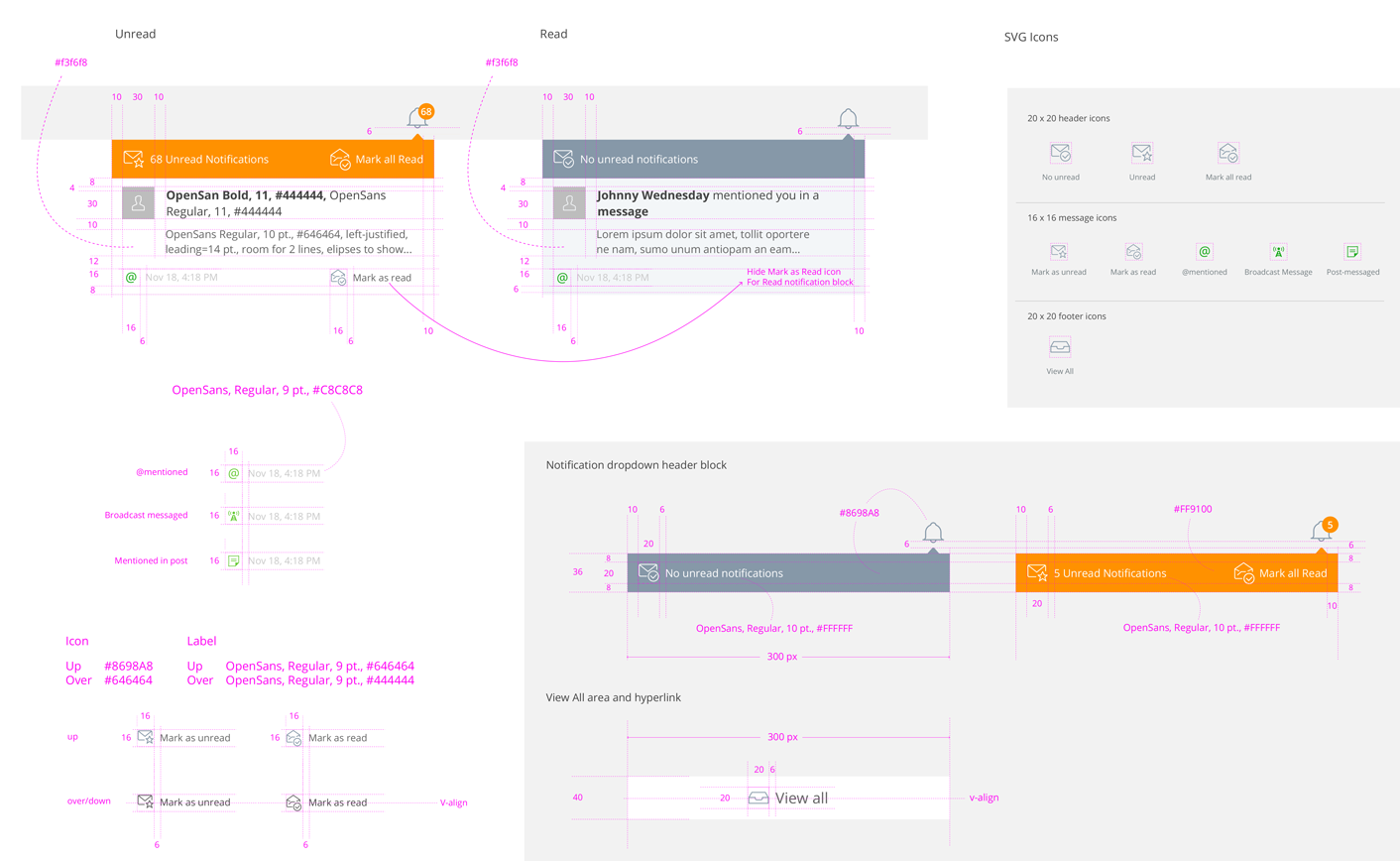
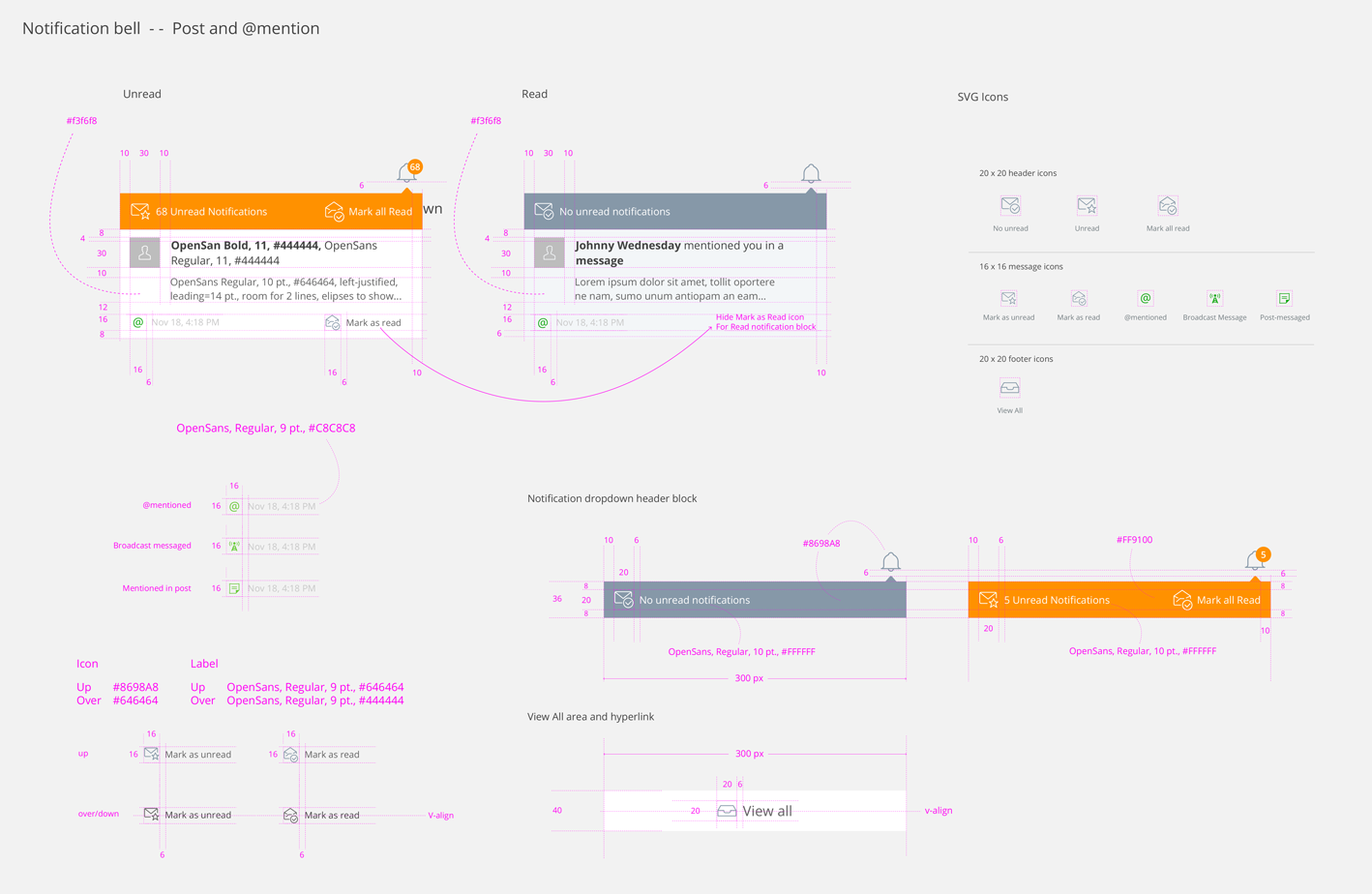
These images are representative snapshots from Western Digital, VMware Socialcast, and CloudOne specification efforts. Full styleguide books remain available in Section 02 below.
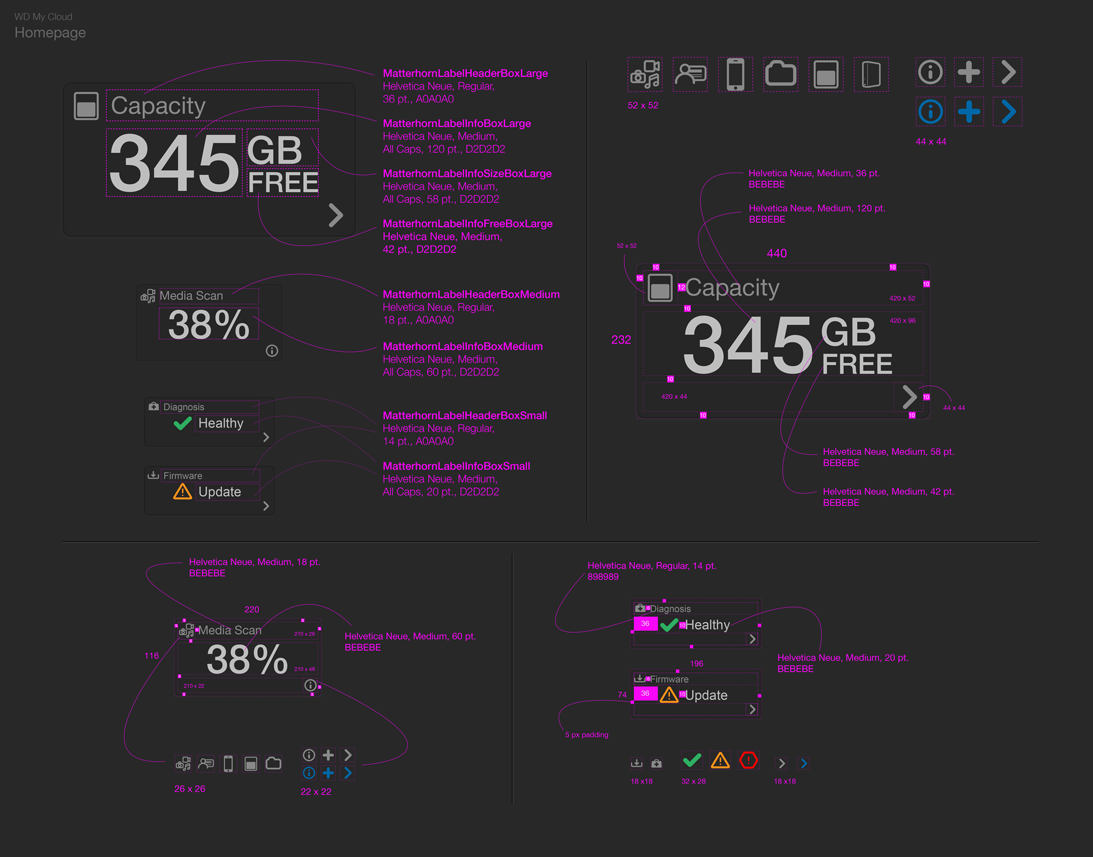
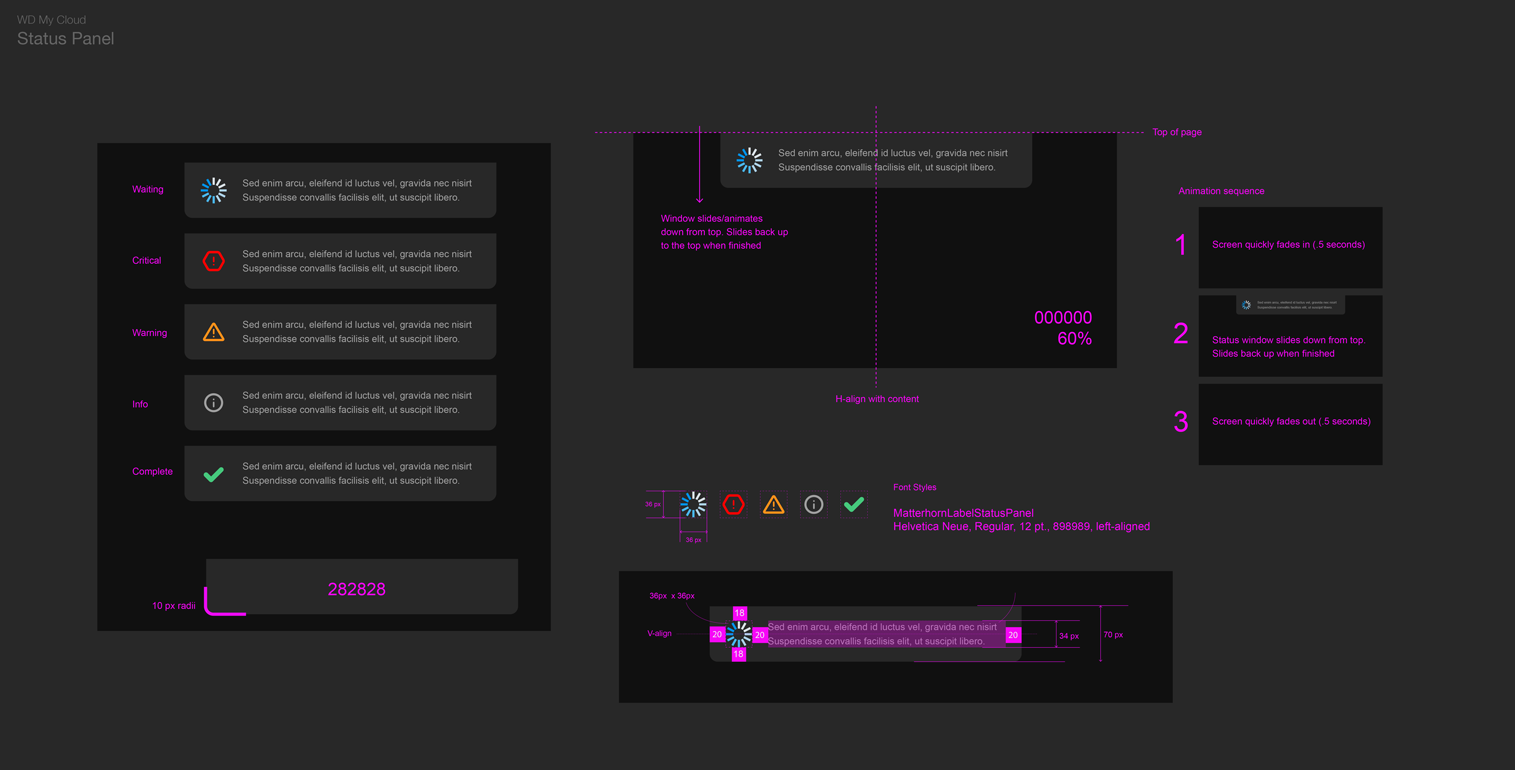
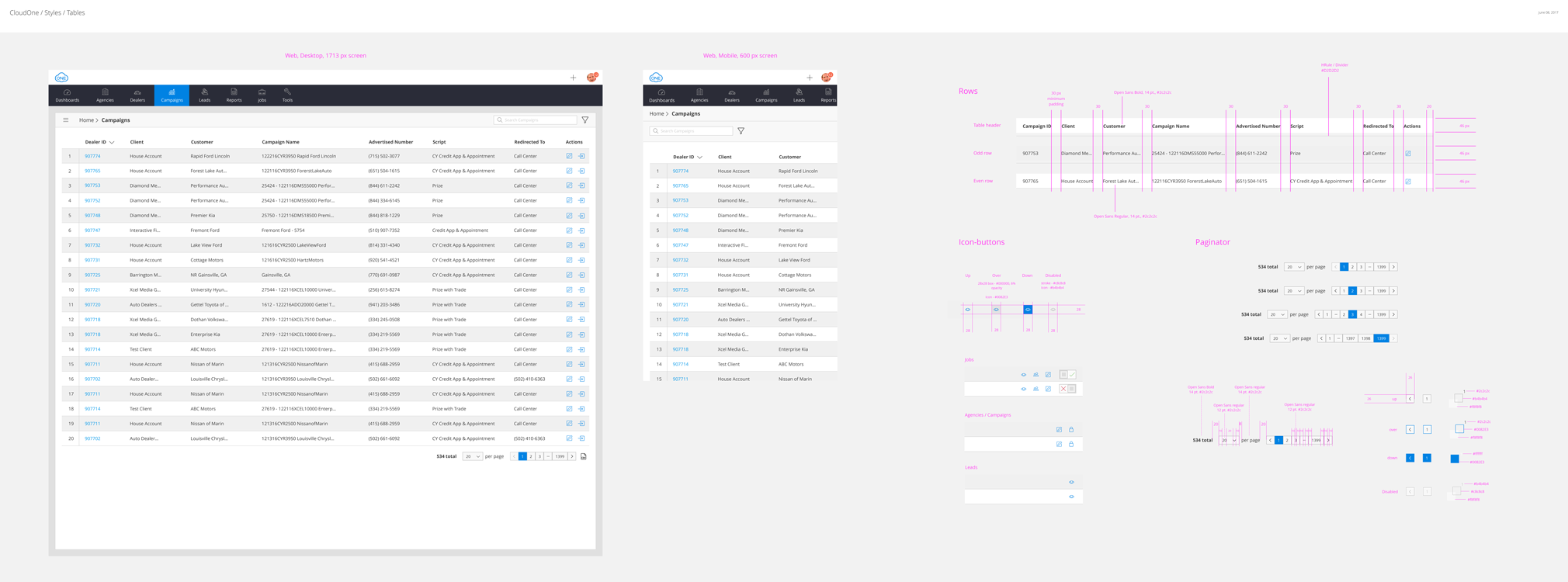
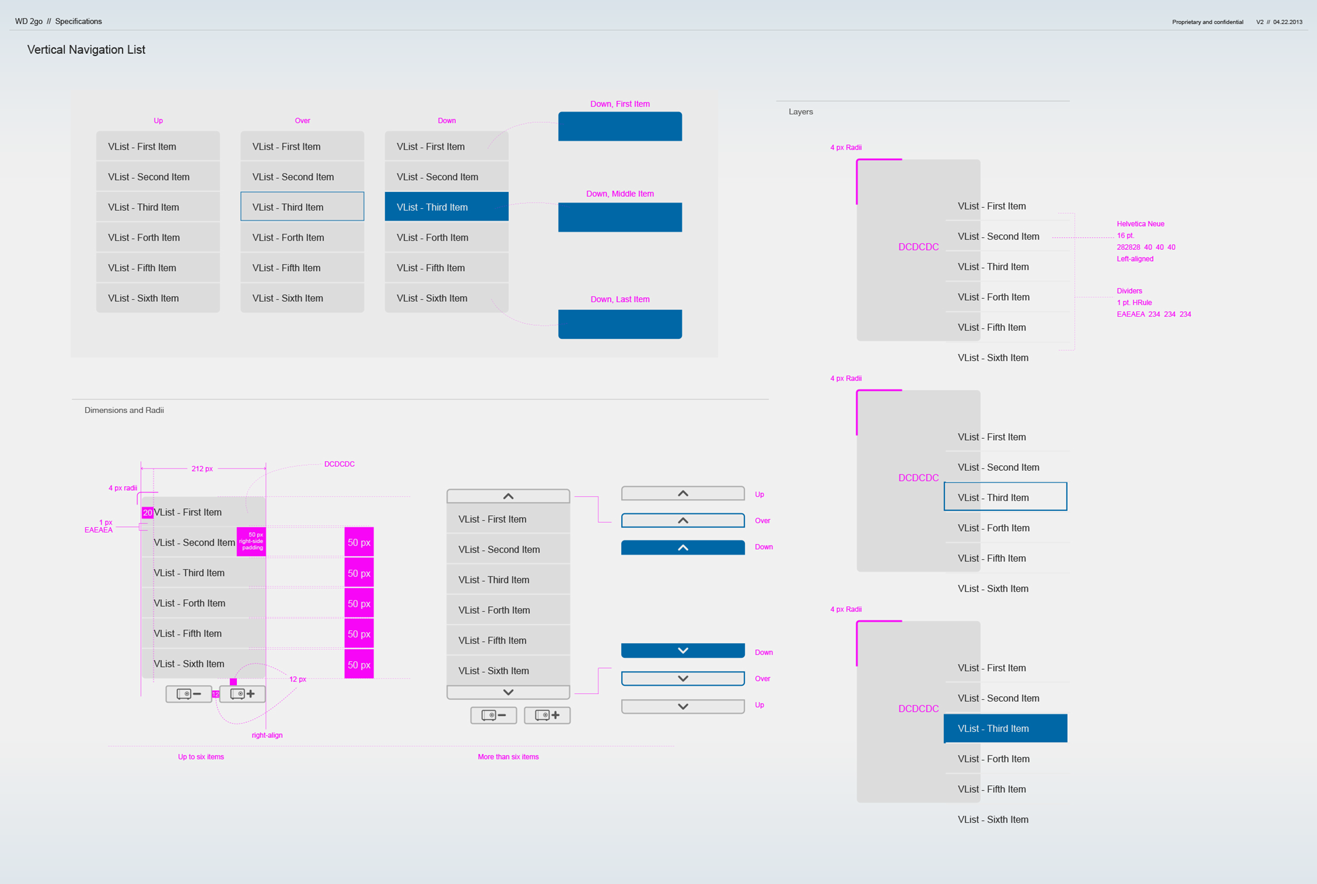
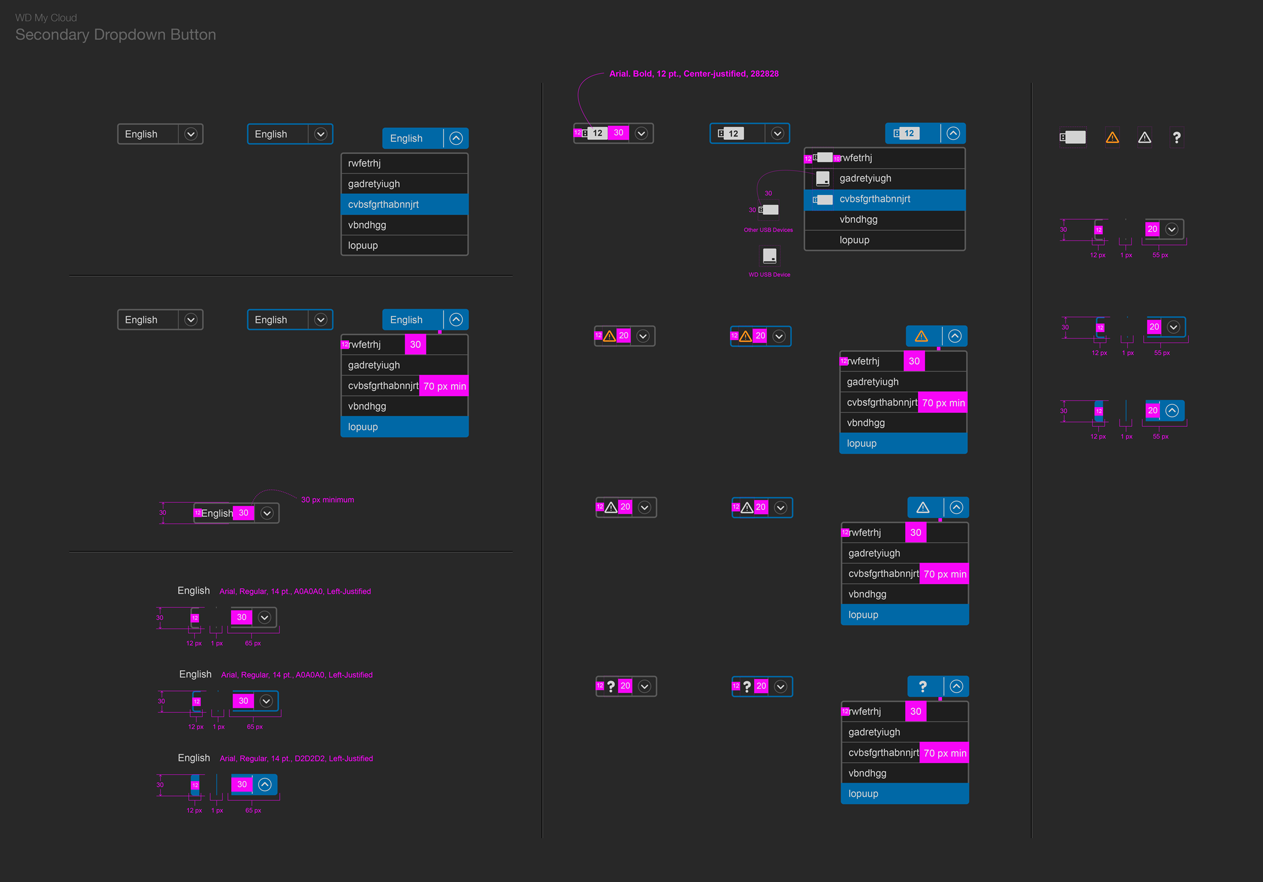
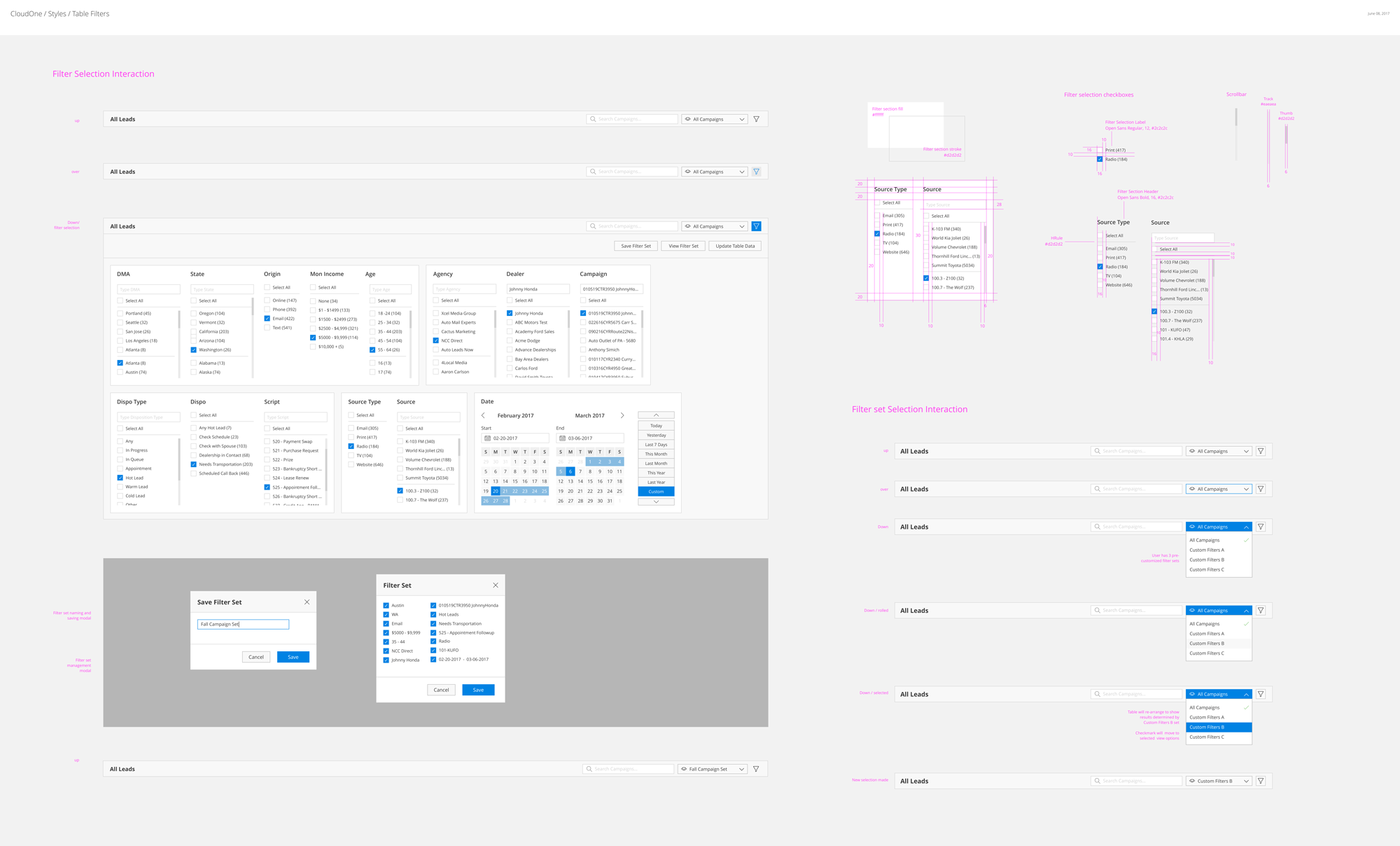
Below are five specification use cases spanning Western Digital, VMware Socialcast, and CloudOne. Each book captures a specific product challenge and the UI system decisions that supported development quality and consistency.
A production specification book for the MyCloud desktop media application, detailing component structures and UI behavior required for a reliable, cohesive desktop product experience.
OPEN SPEC BOOK
A mobile-focused specification system for customers managing media files on MyCloud NAS devices, with attention to clarity, portability, and touch-first interaction consistency.
OPEN SPEC BOOK
A cross-product UI and brand alignment specification built to unify visual language and component behavior across the Western Digital digital product portfolio.
OPEN SPEC BOOK
A UI/UX specification framework for Socialcast, VMware’s collaboration and communication platform, supporting consistent interaction patterns across social and chat surfaces.
OPEN SPEC BOOK
A UI/UX styleguide for the CloudOne CRM platform redesign, documenting scalable component patterns to keep dealership and media workflows visually and behaviorally consistent.
OPEN SPEC BOOK
This specification practice improved design-to-development clarity, reduced implementation drift, and enabled stronger product family cohesion across companies and platforms. More importantly, it created a repeatable quality standard teams could trust and customers could feel.
← Return to design case studies